Google Business Profile for Indian Businesses: Local Quirks
How Google Business Profile works differently for Indian businesses: address formats, category quirks, WhatsApp-driven reviews, and verification.
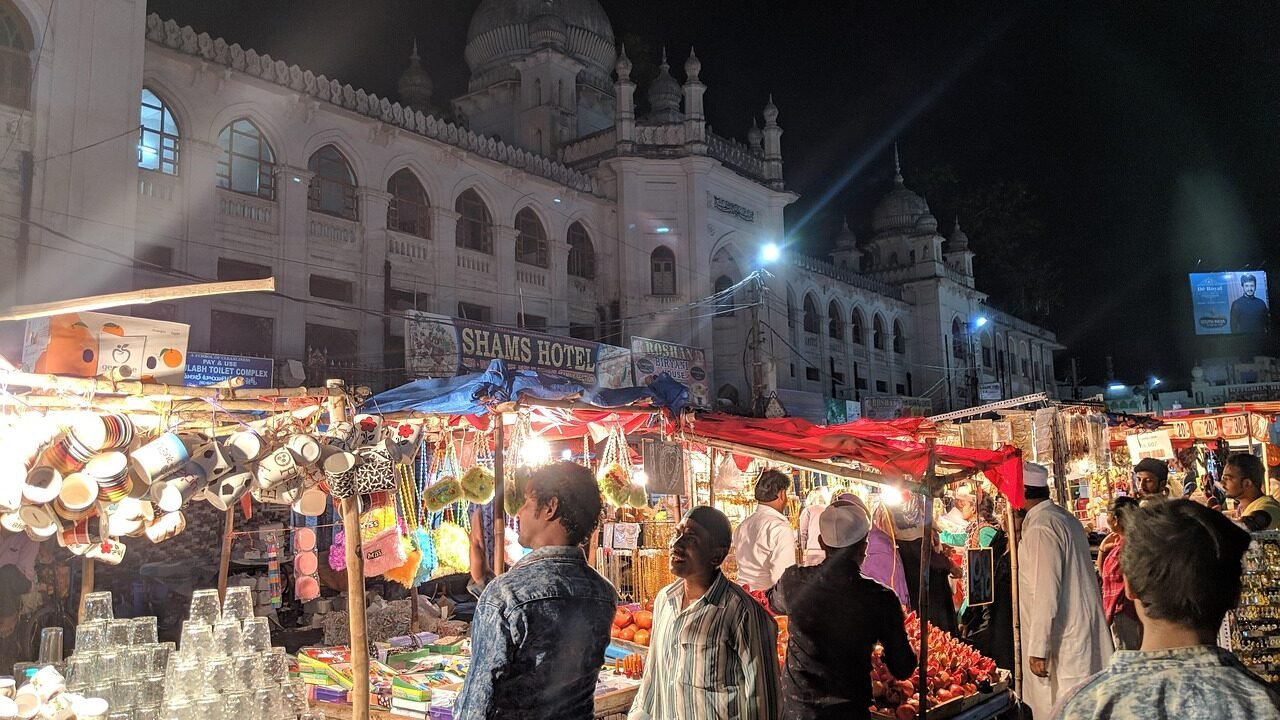
A Google Business Profile behaves differently for an Indian business than the generic setup guides suggest. Category selection collides with how people here actually phrase searches (by locality, by landmark, by service name in Hindi or a regional language mixed with English). Review volume gets skewed by WhatsApp-driven word of mouth rather than review-site habits. Multi-location businesses run into address formats the system wasn’t really built around. For most Indian SMBs, the profile decides whether they show up in the map pack at all, not whether they rank first on a text link below it. Get the fundamentals wrong and a business goes invisible for searches happening two streets away from its own shop.
Why a Google Business Profile Carries More Weight in India
India’s local search behaviour is mobile-first in a way few markets are. A shopper standing outside a mall, or scrolling on a train, types “AC repair near me” or “best dentist [locality name]” and picks from whatever the map pack shows. Google’s own consumer research found that 76% of people who run a “near me” search on their phone visit a business within 24 hours, a number regularly cited across local SEO research including Backlinko’s compiled local search data (Backlinko, Local SEO Statistics). That statistic was never India-specific to begin with, but it maps cleanly onto Indian buying habits: quick decisions, low brand loyalty for everyday services, and a map pack that gets scanned before anything else on the page.
Scale makes this more urgent, not less. India crossed 7.3 crore (73 million) Udyam-registered MSMEs by the end of 2025, according to the Ministry of MSME’s year-end review reported by The Statesman. Every one of those businesses is, in theory, competing for the same three or four map pack slots in its category and locality. A profile that’s half-filled, wrongly categorised, or unverified simply doesn’t get considered for that slot. It isn’t ranked low. It’s absent.
The Address and Category Problem Nobody Warns You About
Google’s address fields were designed around postal systems with consistent house numbering and street naming. Large parts of urban and almost all of rural India don’t work that way. A shop’s real-world address might be “opposite Ram Mandir, near the water tank, Sector 14” with no reliable house number at all. Businesses that force their address into a rigid Western format lose the landmark information customers actually use to navigate, and Google’s own geocoding sometimes pins the location incorrectly as a result.
Category selection has a parallel problem. Google’s category list is built in English and doesn’t map neatly onto Indian retail concepts. A “kirana store” isn’t quite a convenience store. A “medical store” that also does home delivery of medicines isn’t quite a pharmacy in Google’s taxonomy, and picking the wrong primary category can knock a business out of the map pack for its most valuable search terms entirely. Businesses that operate under a mix of a local name and an English trade name (a “chai tapri” run by “Sharma Tea Stall”, for instance) also need to decide, deliberately, which name customers actually search for, because Google penalises keyword-stuffed business names.
| Profile Element | Standard Global Guidance | What Actually Applies in India |
|---|---|---|
| Business address | Enter exact street number and postal code | Add landmark, locality, and pin code; rely on the map pin placement over the text field where the two disagree |
| Primary category | Pick the closest match | Test 2-3 close alternatives; category swaps can change map pack visibility within days |
| Business name | Match legal/signage name exactly | Decide between local-language and English trade name; never append service keywords to the name field |
| Reviews | Encourage post-purchase reviews via email | WhatsApp review requests convert far better than email for most SMBs; review gating is against Google’s policy but common, and risky |
| Verification | Postcard by mail in 5-14 days | Postcard delivery is unreliable in many pin codes; phone or video verification is faster where offered |
Reviews Work Differently Here
In most Western markets, review requests go out by email and businesses live or die by review-site culture built over a decade. That habit barely exists for a typical Indian small business. What exists instead is WhatsApp. A shop owner who asks a satisfied customer to leave a review right there at the counter, sharing a QR code or a direct link over WhatsApp, converts far more of those requests than a follow-up email ever will, mostly because WhatsApp is where the conversation with that customer already happened.
This creates two real risks. First, family-run and single-location businesses often have thin review counts even after years of trading, because nobody ever asked. Second, some agencies and business owners try to shortcut this by offering discounts for five-star reviews or filtering out unhappy customers before asking, both of which violate Google’s review policies (Google’s own guidance on prohibited review practices) and can get a profile’s reviews suppressed or the listing itself suspended. A steady trickle of real reviews, asked for consistently and without conditions, beats a review-gated spike every time. Recency also matters more than most owners assume. A profile with 40 reviews all from three years ago reads as dormant to Google’s ranking systems and to the customer scrolling past it.
- Primary category tested against at least two close alternatives, not just the first obvious match
- Address field includes locality and a recognisable landmark, not just a house number
- Business name matches signage exactly, no appended keywords
- At least 10 photos uploaded, including the storefront, interior, and product or service in use
- A WhatsApp-based review request habit built into the point of sale, not a one-off email blast
- Q&A section pre-seeded with the 5-6 questions customers actually call in to ask
- Business hours updated for every festival and local holiday closure, not left on default
Multi-Location and Franchise Listings Outside the Metros
Tier 2 and tier 3 cities are where a lot of India’s next wave of Google Business Profile adoption is happening, and they’re also where the friction is worst. Postcard verification, still Google’s default method in many pin codes, can take weeks or simply never arrive if the local postal route is unreliable. Businesses opening a second or third branch in a smaller town often duplicate their existing listing instead of creating a distinct one, which triggers Google’s duplicate-listing detection and can suppress both profiles rather than one.
The fix isn’t complicated, just tedious: one profile per physical location, each with its own phone number where possible, its own set of location-specific photos, and its own review base. A single profile trying to represent five branches under one address listing will rank for none of them well. If postcard verification stalls, checking for phone or video verification eligibility inside the Business Profile dashboard is worth doing before assuming the only option is to wait.
What Actually Moves the Rankings: Photos, Posts, and Q&A
Three profile sections get ignored by most Indian SMBs and disproportionately reward the ones that don’t skip them.
- Photos. A profile with real, recent photos of the storefront, staff, and product signals activity to both Google and the customer deciding whether to walk in. Stock images or a single old logo photo read as neglect.
- Posts. The Updates feature lets a business publish short posts about offers, festival hours, or new stock directly to the profile. Almost nobody in the SMB segment uses it consistently, which makes it one of the cheaper ways to stand out in a crowded map pack.
- Questions and answers. Anyone can post a question on a Google Business Profile, and anyone can answer it, including people with no connection to the business. Owners who never check this section end up with wrong information sitting live on their own listing, sometimes for months.
None of these three require a developer, an agency retainer, or a rupee of ad spend. They require someone on staff spending twenty minutes a week on the profile, which is exactly the twenty minutes most small business owners never find.
Common Mistakes Indian Businesses Make on GBP
A few patterns show up repeatedly across sectors, from clinics to restaurants to service businesses. Keyword-stuffing the business name (“Sharma Dental Clinic – Best Dentist Near Me”) is against Google’s guidelines and often gets flagged for a name edit or suspension. Leaving the category as a generic catch-all like “Establishment” because the owner couldn’t decide is worse than picking an imperfect but specific category. Ignoring negative reviews entirely, rather than responding professionally, signals to future customers that nobody’s managing the business online at all. And treating the profile as a one-time setup task rather than something that needs a monthly check is probably the single biggest reason profiles that started strong quietly lose their map pack position over a year or two.
None of this is exotic. It’s the same discipline any digital channel needs, applied to a profile that happens to be free to run and, for a huge share of Indian SMBs, the single most valuable listing they have.
How long does Google Business Profile verification take in India?
Postcard verification typically takes 5 to 14 days if it arrives at all, and delivery is inconsistent in many pin codes outside major cities. Phone or video verification, where Google offers it for a given business category, is usually completed within a day. Check the verification options inside the dashboard before defaulting to postcard.
Can I use my shop’s local-language name on my Google Business Profile?
Yes, as long as it matches your actual signage and legal trade name. Google allows local-language business names but disallows adding extra keywords or service descriptions to the name field, in any language.
Why does my Google Business Profile not show up for searches near my shop?
The most common causes are an unverified listing, a mismatched or overly generic category, a pin location that doesn’t match the real address, or a profile with too few or too old reviews compared with nearby competitors. Checking these four in order resolves most visibility problems.
Is it worth paying someone to manage a Google Business Profile?
For a single-location business with time to spend twenty to thirty minutes a week on photos, posts, and review responses, self-management works fine. Multi-location businesses, or owners who consistently don’t get around to it, tend to see a measurable return from handing it to someone accountable for it, whether that’s a staff member or an agency.
Does responding to negative reviews actually help?
Yes. A professional, specific response to a negative review is read by future customers far more than the original complaint, and Google’s own guidance encourages owners to respond to all reviews, not just positive ones (Google Business Profile Help).
Setting up and maintaining a Google Business Profile correctly is one piece of a larger local visibility problem in India, one that also involves competing directly with aggregator platforms in the search results and building trust signals that convert a search into a phone call. If you’d rather have someone audit and manage this alongside the rest of your search presence, see our services overview for how we approach local and organic visibility together, including for businesses competing with directories like JustDial for the same map pack real estate.
For more on how Indian search behaviour differs from the templates most SEO advice is written for, see our posts on mobile-first search behaviour in India and how Indian consumers actually search. Businesses fighting for visibility against listing sites should also read our breakdown of aggregator-heavy Indian search results, and any business still building credibility with first-time online customers will find our piece on building buyer trust in the Indian market useful alongside this one.